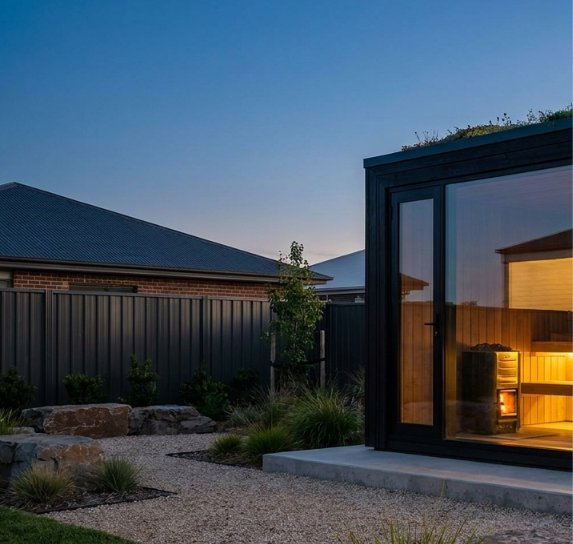
A two to three person cube sauna, fully installed with insulated glass, a properly sized heater, electrical work, and a basic pad, typically runs $7,500 to $11,500 all-in, higher than a comparable barrel or cabin design because of the glass panel cost and the larger heater the glass often requires. Here is what that number actually breaks down into, using a realistic backyard build as the walkthrough.
The Scenario: A Corner of an Existing Deck
Picture a homeowner with an 8 by 10 foot corner of an existing backyard deck, close enough to the house panel that electrical distance is not the limiting factor, who wants a cube sauna specifically for its square footprint and modern glass front rather than a rounded barrel shell. That corner fits a 6 by 6 foot cube comfortably with clearance to spare, which is the size range this cost breakdown is built around.
Step 1: The Unit Itself
A 6 by 6 foot two to three person cube with insulated double-glazed glass on the front wall typically prices between $5,500 and $8,000 before heater, delivery, or installation, trending toward the higher end when the glazing covers a full wall rather than just a door panel. This is usually the single largest line item, and it is worth confirming the quoted price includes the heater or lists it separately, since bundled and unbundled pricing are not directly comparable at a glance.
Step 2: The Heater, Sized for the Glass
If not bundled, a heater sized for a glass-heavy 6 by 6 cube typically runs $800 to $1,400, landing toward the higher end of the 6 to 8 kilowatt range that cube saunas generally need, since the glass wall loses heat faster than an equivalent area of solid kiln-dried wood. Undersizing here to save a couple hundred dollars is one of the more common regrets buyers report, since an undersized heater runs constantly without ever quite holding target temperature on cooler days.
Step 3: The Electrical Circuit
In this scenario, the deck corner sits close to the house panel, which keeps the electrician’s cost toward the lower end of the typical range, roughly $600 to $1,200 for a dedicated 240-volt circuit sized to the heater’s amperage. A larger heater, needed here because of the glass, can push the required circuit from 30 amps to 40 amps, which is a real cost difference worth asking the electrician to quote specifically rather than assuming a flat number regardless of heater size.
Step 4: The Pad or Foundation
Because the flat-panel base of a cube sauna sits on a genuinely level surface more than a barrel’s curved base requires, a paver or poured pad is common even on an existing deck, since deck boards alone can have enough give or unevenness to cause the flat-panel walls to sit slightly out of square over time. Materials for a simple paver pad in this scenario run roughly $400 to $800, less if the existing deck structure only needs minor leveling shims rather than a full new surface.
Step 5: Delivery and Assembly
Most cube saunas ship as flat-pack modular panels, and a straightforward kit like this one takes a reasonably capable two-person team one to two days to assemble. DIY assembly in this scenario adds close to nothing beyond a couple of rented tools, while professional installation typically adds $1,000 to $1,800. For a homeowner without a second set of hands available for a full weekend, that professional cost buys back the time and reduces the risk of a slightly out-of-square glass panel that can be harder to correct after the fact than a wood panel would be.
Adding It Up
Running the DIY path: $6,500 unit and heater, plus $900 electrical, plus $600 pad, lands around $8,000. Adding professional assembly pushes the same build to roughly $9,300 to $9,800. Both fall inside the $7,500 to $11,500 range this walkthrough opened with, and the biggest variable by far is the glass coverage on the unit itself, not the install method. A buyer comparing specialty sellers to get a sense of current unit pricing before running their own version of this math can start at https://sweatdecks.com alongside a couple of other retailers.
Step 6: What It Costs to Run After Installation
Expect roughly $20 to $45 a month in electricity for regular use, higher than a comparable solid-walled cabin because of the larger heater the glass requires. Add periodic glass cleaning, which is unique to the cube format, exterior sealant on the wood panels every couple of years, and stone replacement every one to two years. None of these individually are large, but a buyer budgeting only for the sticker price of the unit is likely to underestimate the true multi-year cost of ownership by a meaningful margin.
Is the Extra Cost Worth It Over a Simpler Design?
Research on sauna use does not distinguish between shapes, so the added cost of a cube’s glass and modern styling is a preference decision, not a health decision. A 2018 review in Mayo Clinic Proceedings summarized cardiovascular associations tied to regular sauna use, and a 2023 update found similar associations when sauna use accompanied other healthy habits. Those benefits accrue the same way in a cube, a cabin, or a barrel used consistently, so the premium for a cube is really about the corner-fitting footprint and the glass front, not any additional wellness value over a less expensive design.
Where This Scenario Would Cost More
This walkthrough assumes a relatively easy site: an existing deck close to the electrical panel with no trenching or major grading required. A cube sauna sited farther from the house, requiring a buried conduit run to reach the panel, can add $1,500 to $3,000 or more to the electrical line item depending on distance and whether the run crosses a hardscaped path. A site that needs real grading or a full concrete pour rather than a simple paver base can add another $800 to $2,000. Getting a firm site-specific quote for both before ordering the unit is the best way to avoid a budget that assumed the easiest possible conditions.
Bundled Pricing to Watch For
Some retailers advertise a single bundled price covering the unit and heater together, which makes comparison shopping easier, while others list the heater as a required add-on priced separately, making an initial quote look lower than the real total. It is worth asking directly whether a quote includes delivery, since freight on a unit this size is sometimes billed separately and can add several hundred dollars. Reading a quote line by line before comparing two retailers avoids the mistake of comparing a bundled number from one against an unbundled number from another.
Frequently Asked Questions
What does a two to three person cube sauna cost installed? Typically $7,500 to $11,500 depending on region, glass coverage, and DIY versus professional assembly.
Why do cube saunas often cost more than similarly sized barrel saunas? Insulated glass, modular flat-panel construction, and a larger heater to compensate for glass heat loss all add cost.
Does a cube sauna’s glass front increase the electrical cost? Indirectly, since a bigger heater to offset glass heat loss can require a larger, more expensive circuit.
Is a concrete pad required under a cube sauna? Not always, but a level paver or poured pad is common since the flat-panel base needs a truly even surface.
What ongoing costs come with a cube sauna after installation? Roughly $20 to $45 a month in electricity, plus glass cleaning, exterior sealant, and periodic stone replacement.
References
- Does the Combination of Finnish Sauna Bathing and Other Lifestyle Factors Confer Additional Health Benefits? A Review of the Evidence, Mayo Clinic Proceedings, 2023
- Effects of heat and cold on health, with special reference to Finnish sauna bathing, American Journal of Physiology, 2018
- Cardiovascular and Other Health Benefits of Sauna Bathing: A Review of the Evidence, Mayo Clinic Proceedings, 2018
By Trevor Lindqvist