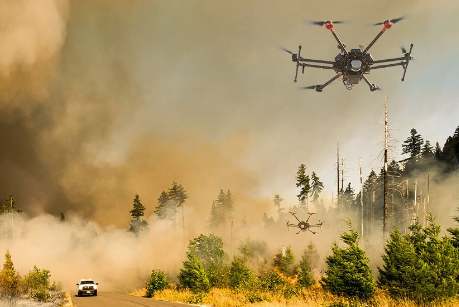
The integration of drones and robotics into disaster technology marks a significant evolution in emergency management. Drones facilitate rapid aerial mapping and supply delivery, while robotics navigate perilous environments for effective search and rescue. This synergy enhances situational awareness and optimizes resource allocation. However, the implications of these advancements on disaster response strategies warrant further exploration. What challenges and opportunities lie ahead in this technological landscape?
The Role of Drones in Emergency Response
As disasters increasingly challenge traditional emergency response methods, drones have emerged as vital tools for enhancing situational awareness and operational efficiency.
Their capabilities in aerial mapping facilitate rapid assessment of affected areas, while drone delivery systems ensure timely distribution of essential supplies.
This innovative approach not only optimizes resource allocation but also empowers responders, ultimately fostering a more effective and resilient emergency response framework.
Robotics for Search and Rescue Operations
The integration of robotics into search and rescue operations has revolutionized the capabilities of emergency responders in disaster scenarios.
By leveraging robotic autonomy, these technologies enhance search efficiency, allowing for rapid assessments of hazardous environments.
Robots can navigate treacherous terrains, locate victims, and provide crucial data, thereby facilitating timely interventions that save lives while minimizing risks to human rescuers in unpredictable conditions.
Read Also: Disaster Response Technology Explained
Enhancing Situational Awareness With Technology
Significant advancements in technology have transformed situational awareness in disaster management, enabling responders to make informed decisions quickly.
Data visualization tools facilitate the interpretation of complex information, while real-time monitoring systems provide up-to-date insights on evolving conditions.
Together, these technologies empower responders to strategize effectively, ensuring timely interventions and maximizing resources, ultimately enhancing the safety and efficiency of disaster response operations.
Future Trends in Disaster Technology Integration
While emerging technologies continue to reshape disaster response, the integration of drones and robotics is poised to revolutionize future operations.
Machine learning algorithms will enhance data analytics, enabling real-time decision-making and resource allocation.
This synergy will empower responders to navigate complex environments, optimizing efficiency and effectiveness.
Ultimately, the convergence of these technologies promises to facilitate a more agile, informed approach to disaster management.
Conclusion
In an era where drones and robots are the new heroes of disaster response, one must wonder if they will soon demand their own awards for bravery. As they soar and scuttle through chaos, perhaps an Oscar for “Best Performance in a Crisis” is in order. While humans strategize and debate, these tireless machines tirelessly map, deliver, and rescue, proving that in the high-stakes game of disaster management, the real MVPs might just be made of circuits and propellers.