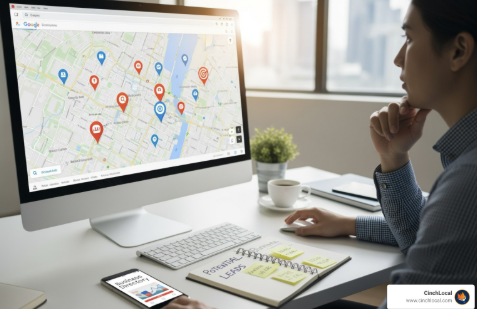
The internet was built on the promise of openness and equal access to information. Over time, many platforms became crowded and competitive. Still, public business data remains available for those who know how to use it wisely. A Google Maps scraper for lead generation helps businesses unlock that public data and turn it into real opportunities. When used with strategy and responsibility, it becomes a powerful growth tool.
Here are nine proven wins you can achieve.
Find Highly Targeted Local Leads
Most businesses struggle with poor targeting. They chase random email lists. They waste money on ads that reach the wrong people.
Google Maps holds structured local data. You can search by city, category, rating, or keyword. This allows you to build a focused list of prospects in a specific niche.
For example, instead of targeting “dentists,” you can target “family dentists in Chicago with fewer than 50 reviews.” That precision improves response rates and saves time.
Clear targeting always wins.
Reach Decision-Makers Faster
Local business listings often include phone numbers, websites, and contact details. This reduces research time.
Instead of manually searching for each company, you collect essential information in one organized export. That means your sales team spends more time closing deals and less time hunting for contacts.
Speed matters in lead generation. Faster access leads to faster outreach.
Identify Businesses With Weak Online Presence
This is one of the most practical advantages.
Look for businesses that:
- Have no website
- Have outdated branding
- Have low ratings
- Have few reviews
These are warm opportunities. They often need SEO, website design, paid ads, or reputation management.
In the center of a smart prospecting system, the Google Maps scraper for lead generation allows you to filter and extract only the businesses that match these signals. Instead of guessing who needs help, you use visible public indicators.
That makes your pitch relevant and timely.
Save Hours of Manual Research
Manual data collection is slow and tiring. It also leads to errors.
Automation removes repetition. You gather structured information in minutes instead of days. You then clean the data, remove duplicates, and organize it for outreach.
This does not mean you skip strategy. It means you eliminate busy work. You focus on analysis and communication instead of copying and pasting.
Efficiency increases profit margins.
See also: Disaster Response Technology Explained
Build Location-Based Campaigns
Local services depend on geography. A plumber in one city cannot serve another state.
With structured location filters, you can create city-specific campaigns. You can tailor your messaging to local competition and trends.
For example:
“I noticed most plumbing services in your area have over 100 reviews. You currently have 12. We can help you close that gap.”
That message works because it references real data.
Location awareness improves credibility.
Analyze Competitor Landscapes
Google Maps data shows more than contact details. It reveals competitive positioning.
You can see:
- Average ratings in a niche
- Review counts
- Popular business categories
- Density of competitors in a region
This helps you advise clients strategically. If competition is high, you suggest differentiation. If competition is low, you push fast expansion.
The Google Maps scraper for lead generation becomes a research tool, not just a contact collector. It helps you understand markets before you sell into them.
Data-backed insight builds authority.
Support Ethical and Responsible Use
Public data should empower businesses, not harm them.
Always respect legal frameworks. Do not scrape private information. Use data for legitimate B2B marketing, research, or outreach. Avoid spam tactics. Personalize communication.
The original vision of the internet focused on accessibility and fairness. Public listings exist so customers can find businesses. When you use this information responsibly, you support transparency rather than exploit it.
Long-term success depends on trust.
Improve Outreach Personalization
Generic emails rarely convert. Personalization increases replies.
With structured listing data, you can mention:
- Business name
- Rating score
- Number of reviews
- Missing website
- Service category
For example:
“I saw your auto repair shop has a 4.2 rating with 18 reviews. We specialize in helping local garages increase reviews to over 100 within six months.”
That message feels specific. It shows effort. It stands out.
The more relevant your message, the stronger your conversion rate.
Scale Lead Generation Predictably
Random marketing creates random results. Systems create predictable growth.
Once you define your niche, filters, and outreach method, you can repeat the process in new cities or industries.
Start small. Test conversion rates. Refine messaging. Track replies. Then expand.
The Google Maps scraper for lead generation supports this scaling process because it provides consistent, structured inputs. When your input remains stable, your output becomes measurable.
Scaling without structure creates chaos. Scaling with data creates momentum.
A Simple Workflow You Can Follow
Here is a practical structure:
- Choose a niche and location.
- Define filtering criteria.
- Extract public listing data.
- Clean and organize the list.
- Identify weak marketing signals.
- Craft personalized outreach messages.
- Track responses and optimize.
This keeps your strategy clear and actionable.
Common Mistakes to Avoid
Avoid these errors:
- Scraping broad, unfocused categories
- Sending mass generic emails
- Ignoring data cleanup
- Failing to test messaging
- Over-scaling too early
Lead generation works best when it stays focused and deliberate.
Final Thoughts
The internet once promised open access to information for everyone. While many systems became closed or algorithm-driven, public business listings still provide opportunity.
When you use structured tools wisely, you level the playing field. Small agencies compete with larger firms. Freelancers build client pipelines without massive ad budgets. Startups validate markets quickly.
A Google Maps scraper for lead generation is not magic. It is a tool. Its power depends on how you apply it.